












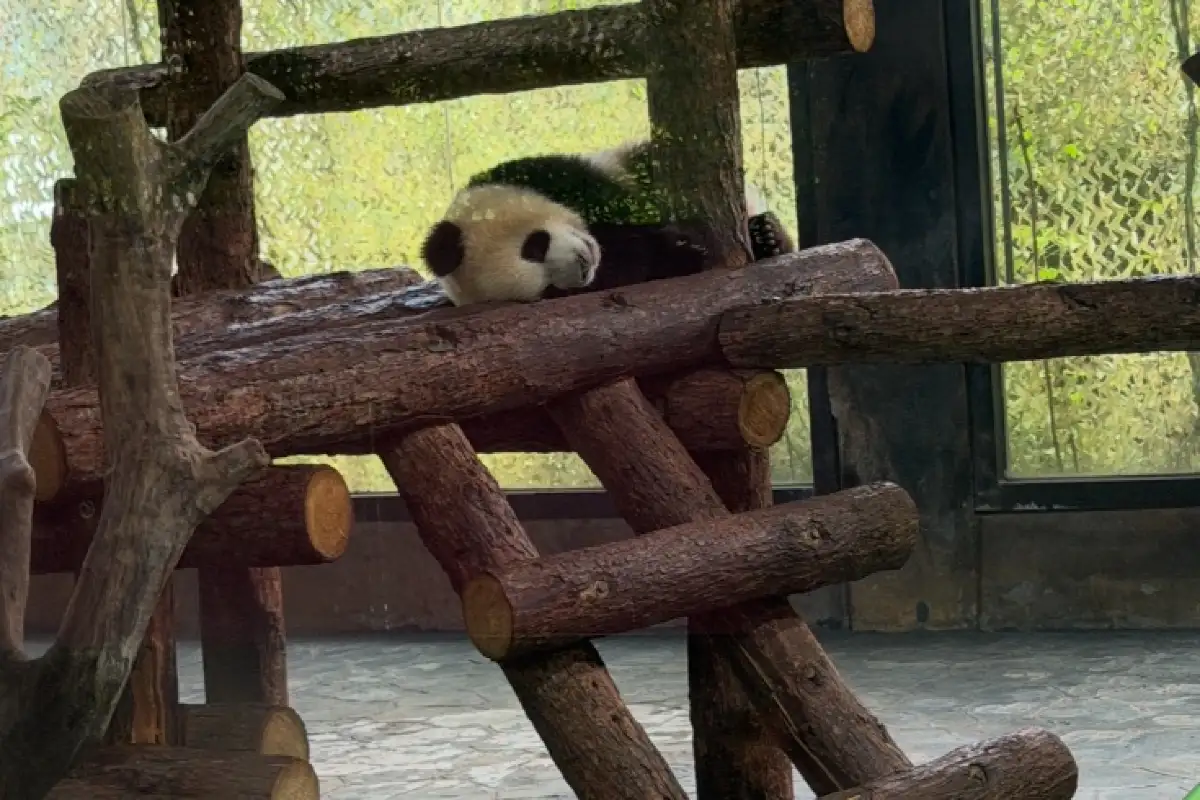
Pandas are the first animal most visitors name when someone mentions Shanghai Wild Animal Park, and the park delivers: a dedicated Giant Panda Pavilion in the walking zone, a relaxed indoor-outdoor habitat, and feeding windows when the bears actually do something more dramatic than sleep. Here is everything worth knowing before you join the crowd at the glass.
🐼 Where to find the Panda House
The Giant Panda Pavilion sits inside the walking area, a few minutes from the main entrance loop — follow the panda signage or simply walk toward the loudest cluster of phones. The enclosure pairs a climate-controlled indoor hall with an outdoor yard planted with bamboo, climbing frames and wooden sleeping platforms. Pandas rotate between the two spaces, so whichever side is open on your visit, the viewing glass and railings keep you close but never intrusive.
Who lives here
The pavilion has hosted several pandas over the years, and cubs born at the park have grown up in front of visitors. Don’t expect a roll-call board with celebrity names in English — keepers identify individuals by markings, and on a quiet day you may see two bears in adjacent yards. In autumn 2025, visitors were watching pandas named Xuebao and Qianjin tuck into bamboo shoots; names rotate as animals move between facilities, which is completely normal for panda programs.
🕐 Feeding times: the golden window
Pandas sleep up to 14 hours a day, so timing beats luck. The reliable window is late morning, around 11:00–11:30, when keepers deliver fresh bamboo shoots and the bears sit up to eat in full view. A second enrichment session often lands in mid-afternoon, but it shifts with the season and the weather. Practical advice from repeated visits:
- Arrive 10–15 minutes early and take a front-rail position; the crowd doubles within minutes of the food arriving.
- If the indoor hall is open, check it first — pandas often prefer air-conditioning in summer and the heated hall in winter.
- After lunch (roughly 12:30–14:30) expect napping. Photograph the sleeping poses, then move on and circle back.
🎋 What the pandas eat here
The keepers’ cart tells the story: buckets of young bamboo shoots, bundles of mature leaf-bearing culms, and enrichment extras — apples on ropes, ice cakes of fruit in summer, and the famous “panda cake” of compressed grain and vitamins. A wild giant panda eats 12–38 kilograms of bamboo a day; the pavilion’s bears get a managed diet calibrated by the keepers, which is why the feeding sessions are short and intense rather than continuous. Watching a panda strip a shoot with its thumb-like pseudo-thumb is one of those details that makes the visit feel genuinely educational rather than just cute.
📸 Getting the shot without fighting the crowd
- Morning light: the outdoor yard is brightest before noon; shooting into the indoor hall works best when the hall lights are on but the sun is behind you.
- Shoot through glass smartly: press your lens (or phone) near the glass at a slight angle to kill reflections; polarising filters help on sunny days.
- The classic frames: panda sitting with a shoot in both paws; panda flat on its back on the wooden platform; cub-style antics if a younger bear is on show.
Our photography guide maps the park’s other standout photo positions.
🧠 Five panda facts to drop on your kids
- Pandas are bears, not raccoons — the debate ended with genetics decades ago.
- That famous “thumb” is an enlarged wrist bone (the radial sesamoid), perfect for gripping bamboo.
- Newborn cubs weigh about 100 grams — roughly a stick of butter — and are pink and hairless.
- Pandas eat sitting upright to keep their front paws free, exactly like the poses you see at the glass.
- China’s panda reserves and captive programs — including parks like this one — are a big reason wild giant pandas were downgraded from “endangered” to “vulnerable” in 2016.
🧭 Fitting pandas into your day
Do the Panda Pavilion mid-morning: enter the park at 09:00, walk the flamingo lake and giraffe dock first while the drive-through queue builds, then slide into the panda house before the 11:00 feed. Families can follow our hour-by-hour family itinerary exactly this way. Tickets with everything included start around $28 on Trip.com — panda viewing costs nothing extra.
❓ Panda FAQ
Can I hold or feed a panda?
No. Panda care is strictly keeper-only at every Chinese facility, and touching is prohibited. The closest you get is the viewing rail or glass — which is closer than any wild panda will ever let you be.
Are the pandas outside in winter?
Sometimes. Pandas tolerate cold well; on crisp sunny days the outdoor yard stays open, but the heated indoor hall is the reliable winter bet.
Is there a panda-themed souvenir?
Yes — the shop by the pavilion exit sells panda plushes, and the park’s food stalls do a panda-shaped set meal; our dining guide lists where.
How long should we stay?
20–30 minutes: one feeding window plus a slow walk around both viewing sides. Longer than that and you are just waiting for a nap to end.
