 01
The Herbivore Plains
The safari’s gentle opening act: zebras, wildebeest, antelopes and the stately white rhinos grazing open grassland — often close enough to hear them chew. The coach passes slowly; keep the camera ready on the right side.
上海野生动物园 · 10,000 animals, 200+ species
Two worlds on 153 hectares: a drive-through safari where herds and predators roam free, and a walking area built around close encounters — from giant pandas to lemurs that share your bench.
The collection
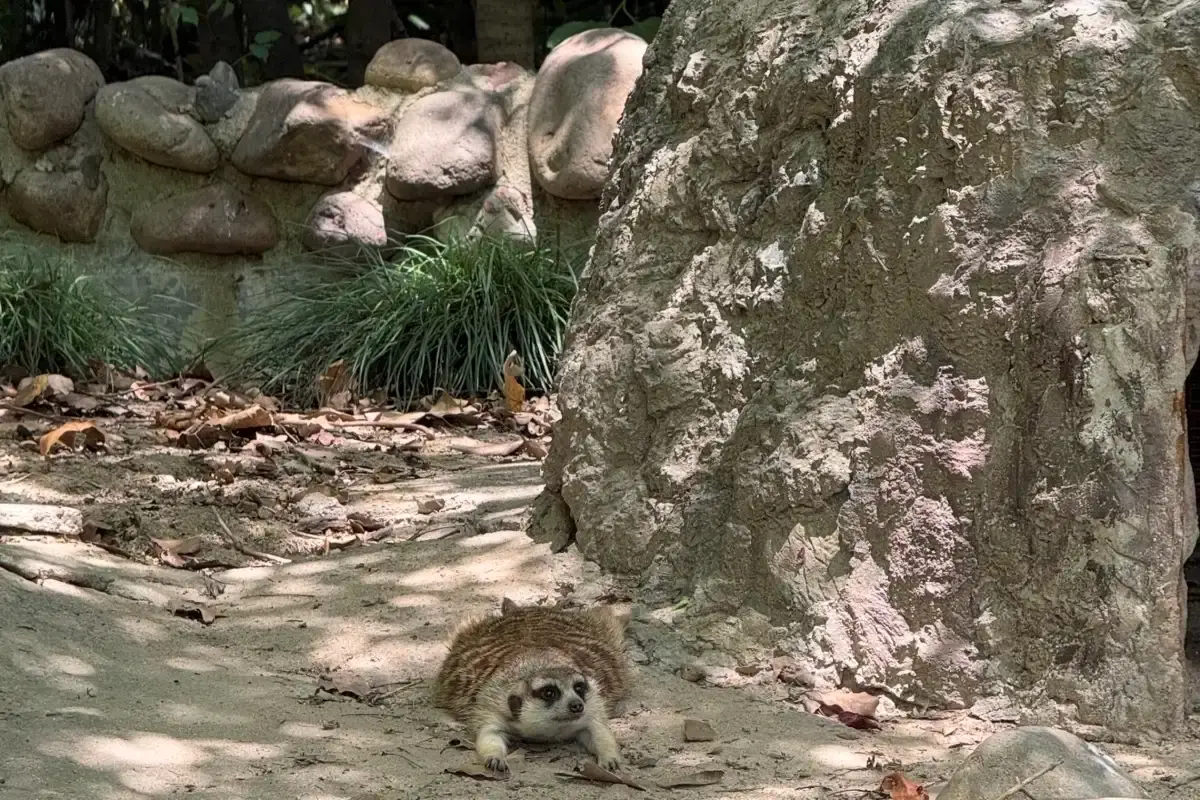
The park’s roll call reads like a round-the-world ticket: China’s national treasures — giant pandas, golden snub-nosed monkeys, takins and crested ibis — share the grounds with African imports — giraffes, zebras, antelopes and white rhinos — plus cheetahs, kangaroos, flamingos, penguins, elephants, chimpanzees, gibbons and more than 10,000 neighbors across 200+ species.
The layout does the storytelling. In the drive-through area, visitors stay in the coach while animals rule the habitats — the safari formula, at AAAAA standard. In the walking area, the tables turn: feeding docks bring giraffes and red pandas to hand level, lemurs climb onto the deck beside you, and the theaters put animal behavior on stage a few times a day.
The zones
Every zone earns a different kind of memory — here is what each one is for.
01The safari’s gentle opening act: zebras, wildebeest, antelopes and the stately white rhinos grazing open grassland — often close enough to hear them chew. The coach passes slowly; keep the camera ready on the right side.
 02
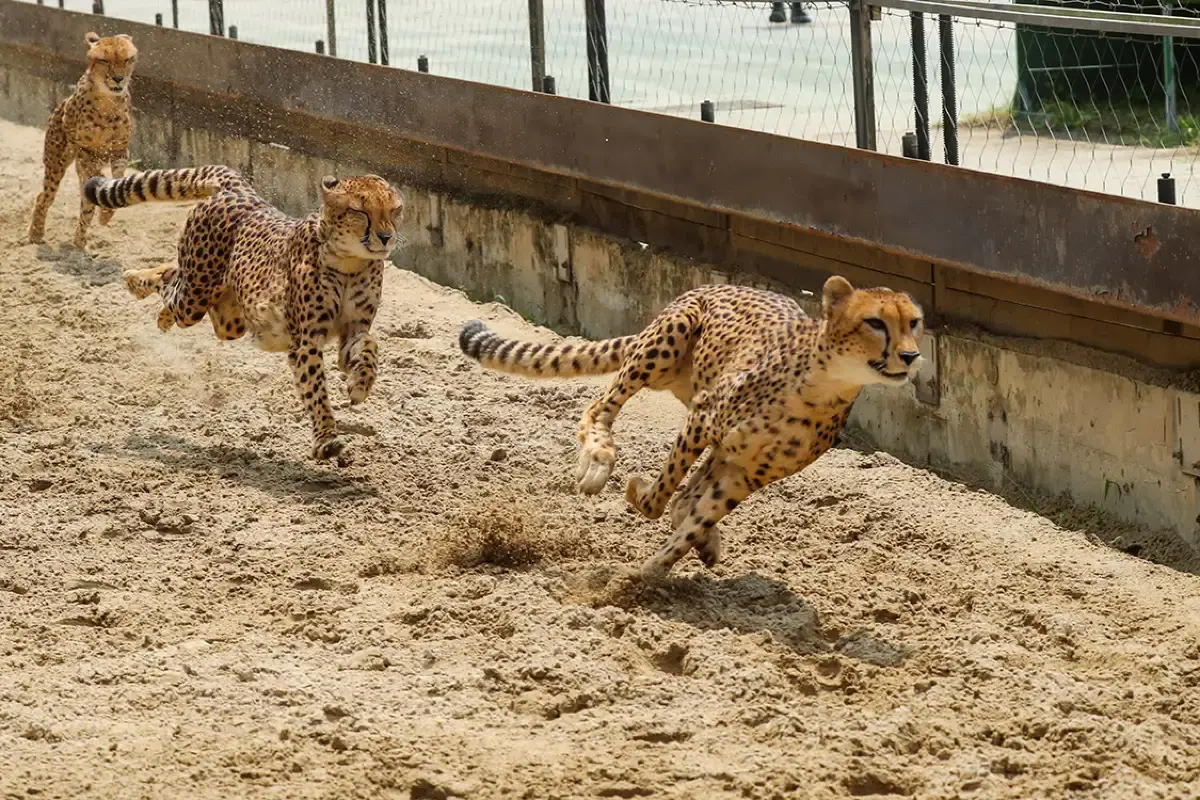
Siberian tigers, African lions, bears, wolves and cheetahs in free-roaming enclosures. On the standard coach you watch through glass; on the open feeding bus, keepers toss the lunch run right beside your seat.
 03
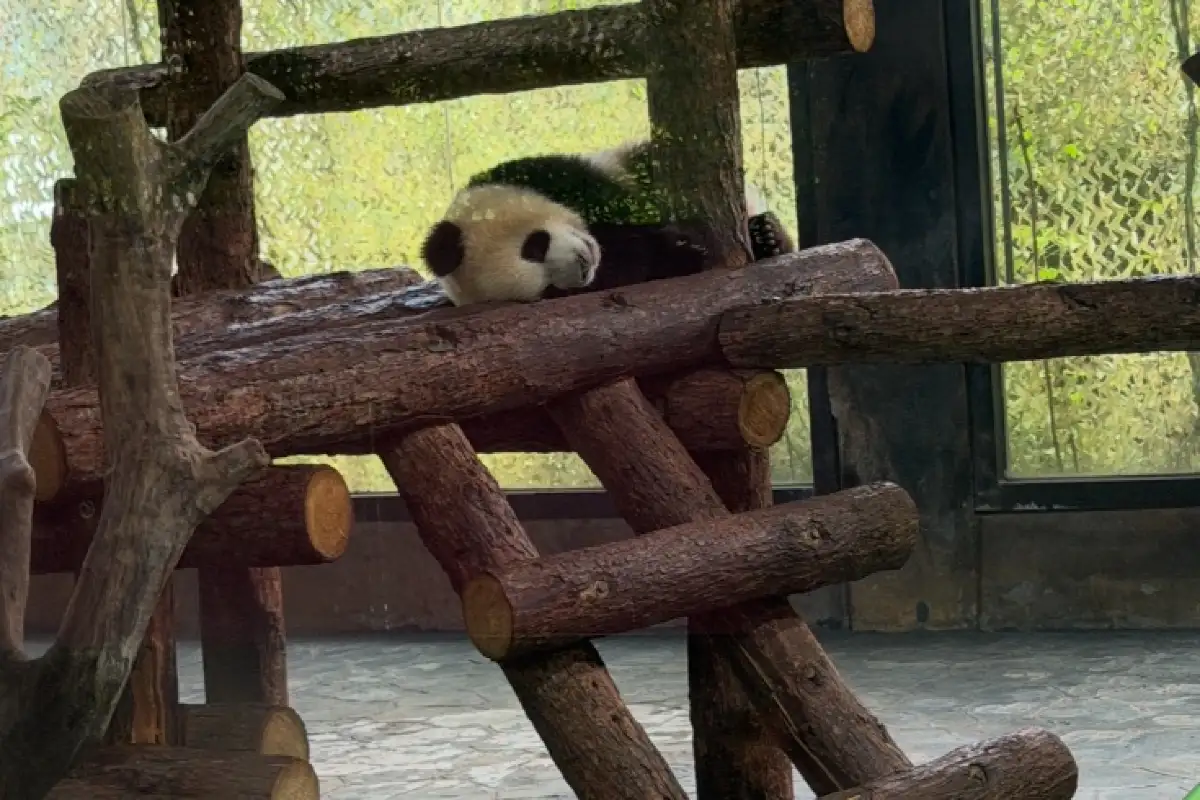
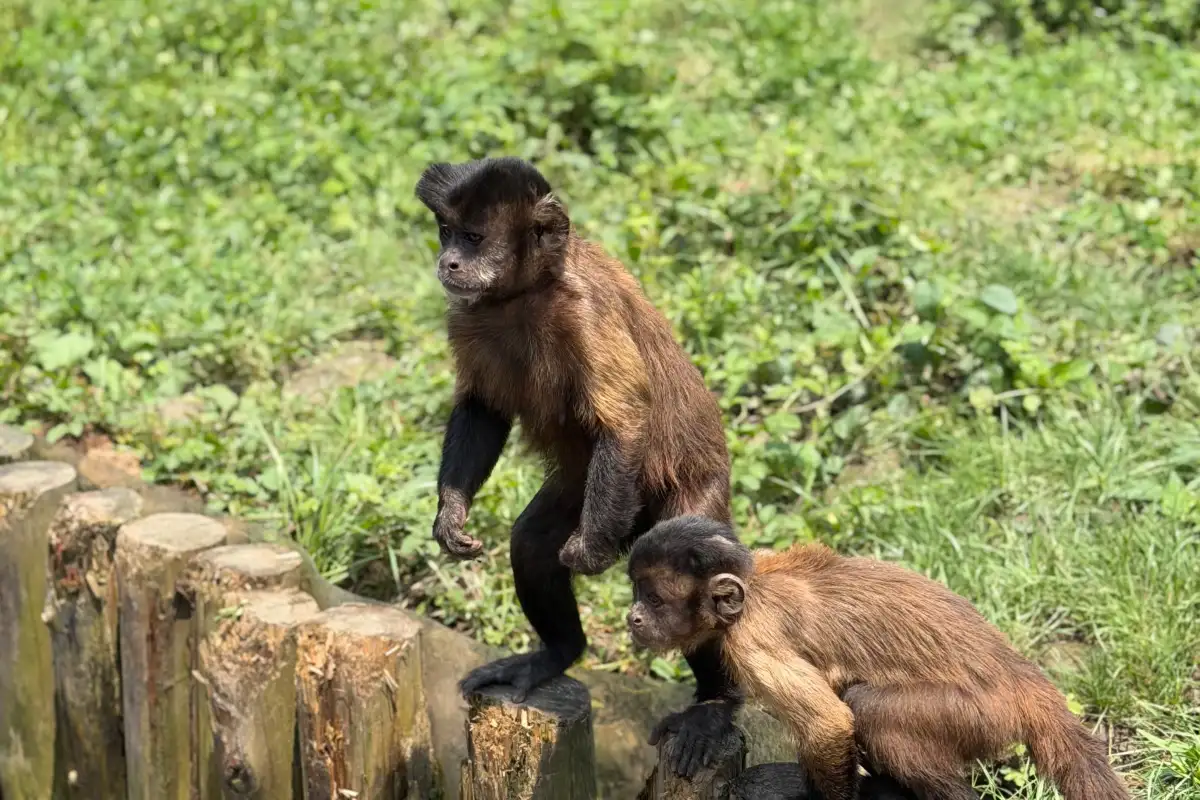
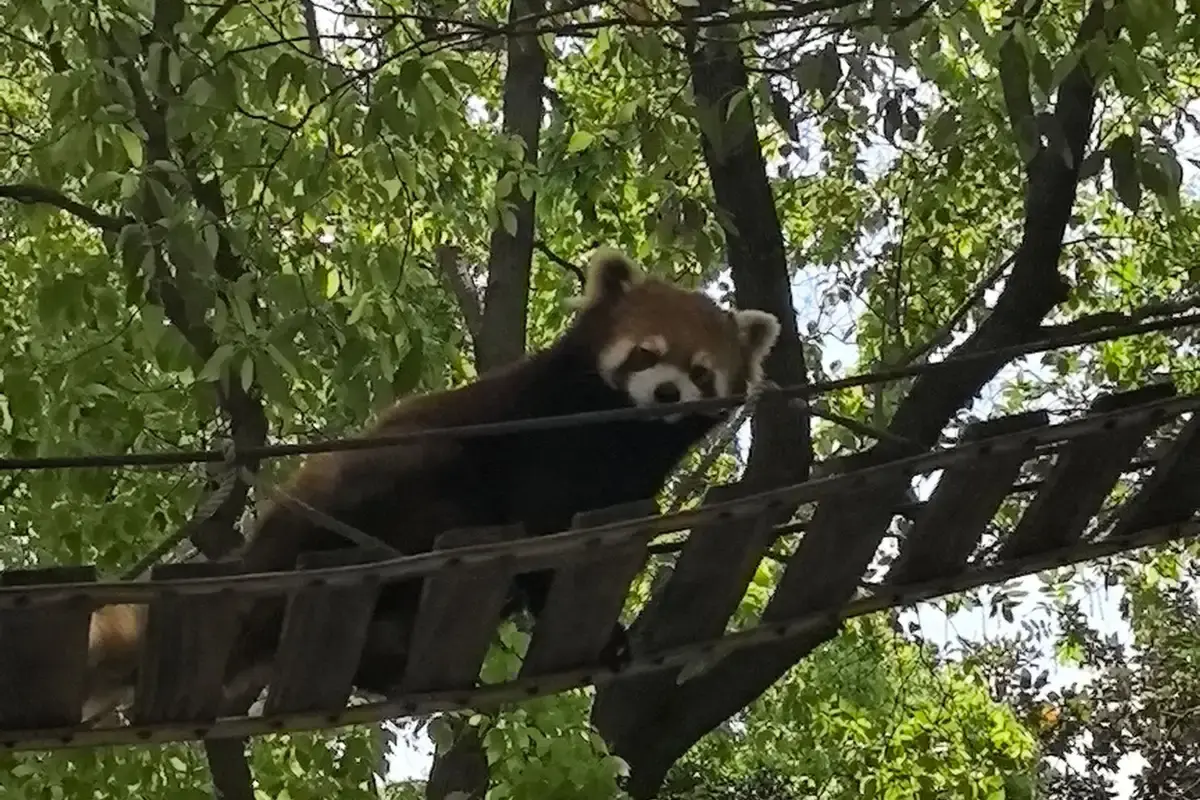
The air-conditioned panda pavilion keeps the stars comfortable and the viewing glass close; the walk-through red panda habitat next door is the near-contact favorite — travelers rate it the single best-value feeding extra in the park.
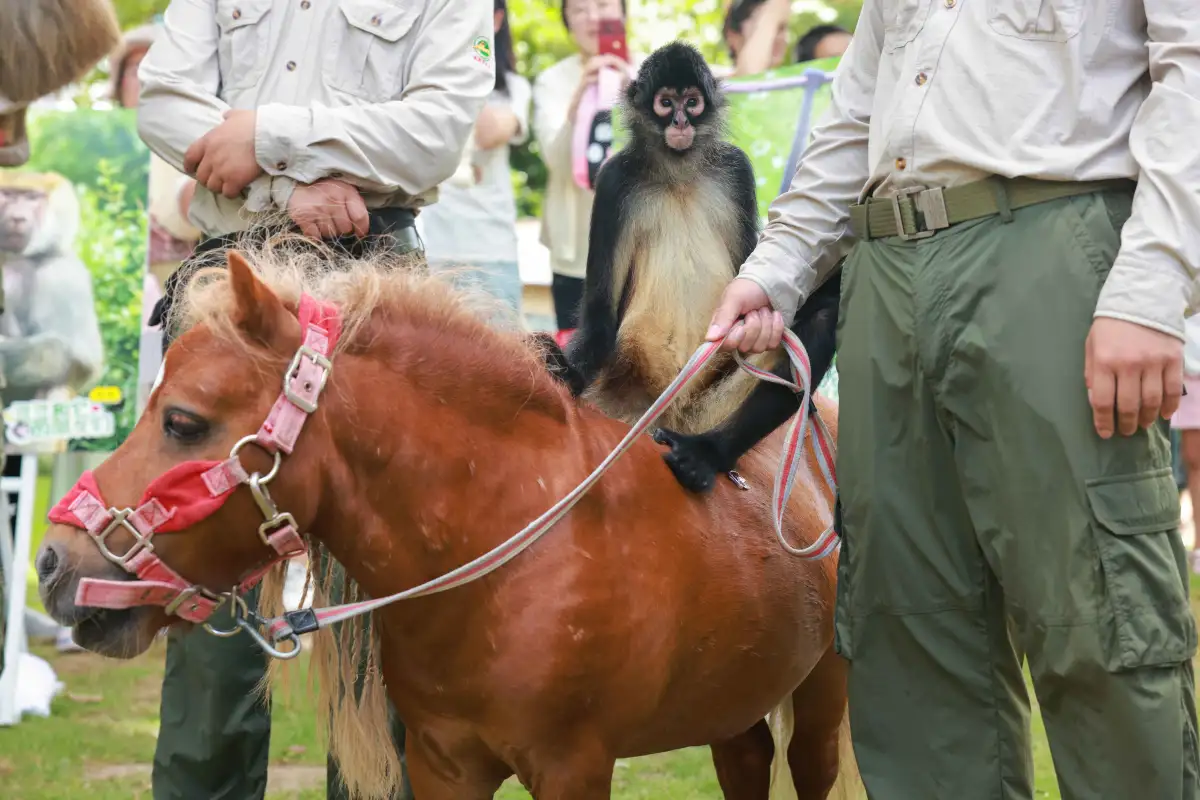
04Ring-tailed lemurs live island-free-range: they sunbathe on the deck, pose at arm’s length and accept apple slices from a fork sold at the island kiosk. The park’s most interactive stop — and its most photographed.
 05
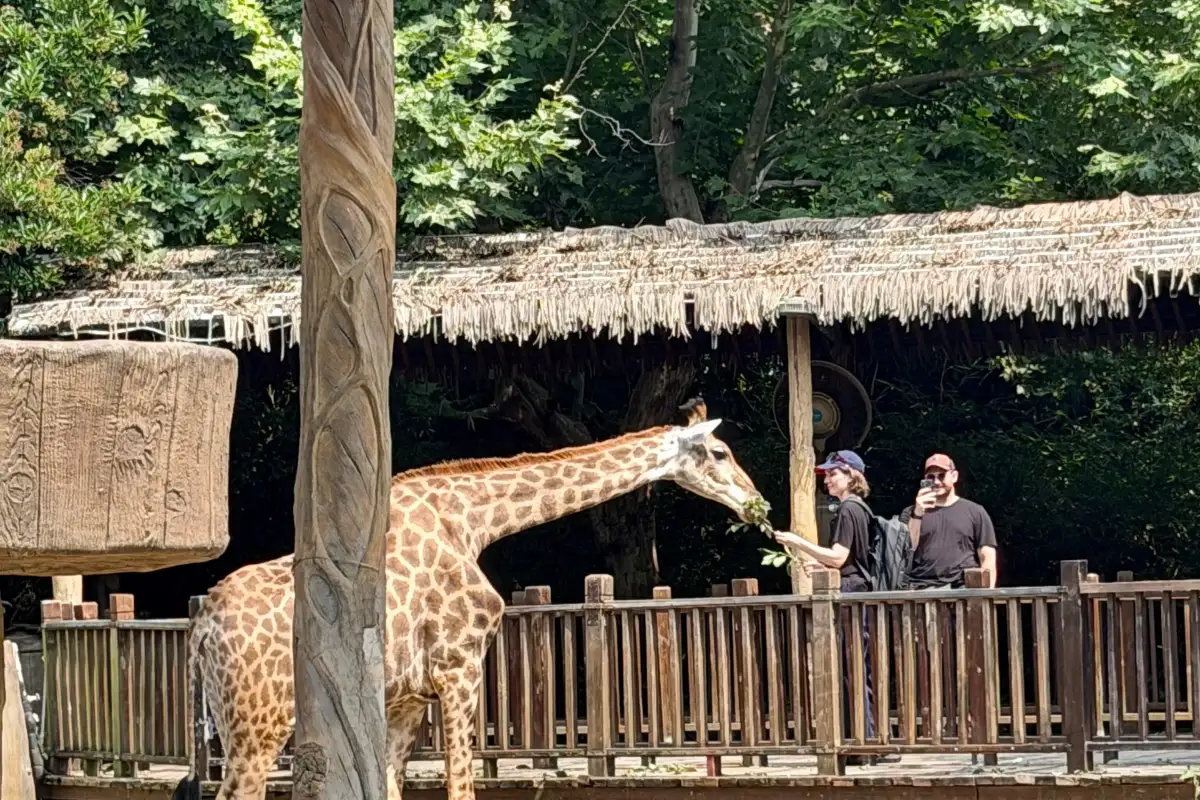
Leaf branches at the giraffe dock bring the world’s tallest land animal to eye level; the nursery garden shows breeding and hand-rearing work for the park’s rarest residents.
 06
Flamingo lagoon at the gate, swans and pelicans on the lake (boat rides available), the Sea Lion Theater, Sun Plaza and the Hundred Beasts Mountain amphitheater — the park’s stage half.
Three decades, briefly
From first-of-its-kind gate to Asia 100 list — the milestones that made the park.
On November 18, 1995, Shanghai Wild Animal Park opens as China’s first national-level wild animal park — a 153-hectare joint project for wildlife display, breeding, protection and science education in Pudong.
The park is formally rated AAAAA (5A) — the highest honor China gives a scenic area, and the same tier as the country’s greatest landmarks. It remains one of only a handful of 5A zoological parks.
The park launches China’s first night-safari program, adding evening hours on selected schedules — a nod to how many animals own the dark. Standard hours stay 09:00–17:00 with admission ending at 4:00 PM.
With 10,000+ animals, new additions like the Capybara Park, and 129,171 Trip.com reviews averaging 4.5/5, the park lands on the 2026 Asia 100 — Family-friendly Attractions list. The safari coach still leaves the gate every few minutes.
Close encounters
Straight from the reviews — where the famous faces show up and when they perform.
 English English
 Chinese (China)
 Chinese (Hong Kong)
 Chinese (Taiwan)
 Russian
 Korean
 Japanese
 Thai
 Spanish
 German
 French
 Portuguese
 Italian