












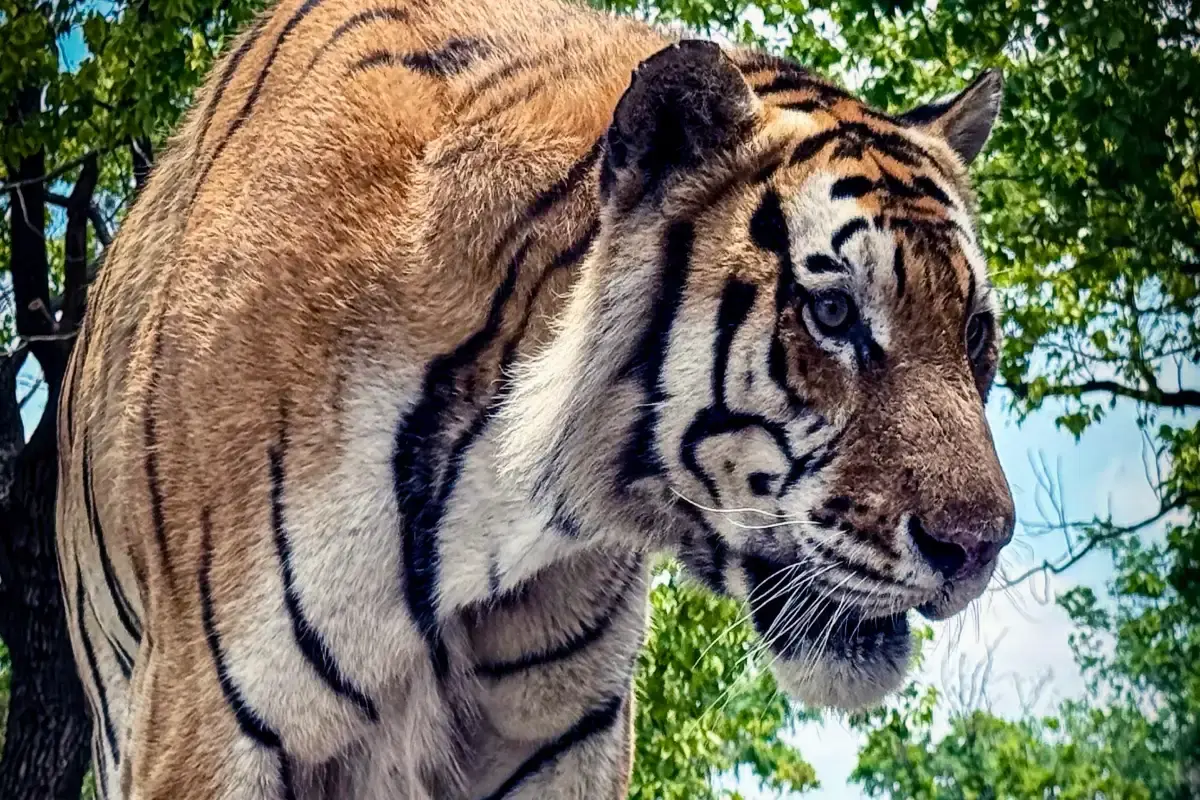
Shanghai Wild Animal Park holds one of China’s most impressive big-cat collections — and unlike a city zoo, you watch most of it from inside a vehicle rolling through the animals’ own territory. Siberian tigers swim, white tigers lounge, lions hold the ridge, and the cheetahs do something almost no other park in China stages: a genuine sprint. Here is where every cat lives and how to see each one active.
🐯 The drive-through predator zones
Half the park’s cat collection lives behind the drive-through gates, where vehicles are the barrier. From the safari coach (included with every ticket), the feeding bus (¥50) or the VIP feeding car (¥100), you pass in sequence:
- Malayan Bear Kingdom — not cats, but the first feeding frenzy; Malayan sun bears climb the coach’s flanks for keeper handouts.
- Wolf Valley — a pack that patrols treelines and, when keepers stage feeds, moves like a single animal.
- White Tiger Territory — the pale cats that made the park famous; look for them sprawled in shade, or belly-deep in the water channel on hot days.
- Forest Kings (lions) — an African lion pride on a rise; males hold the ridge, females do the investigating around vehicles.
- Brown bear hollow and the Siberian tiger forest — the finale, where the park’s biggest cats swim, climb feeding towers and demonstrate why they are the largest tigers on earth.
Our safari bus guide explains seat choice and queue timing in detail.
🐆 The cheetah sprint: China’s only regular race
The walking zone’s cheetah field stages the park’s signature demonstration: keepers lure one or more cheetahs down a straight course with a moving lure, and the cats hit full sprint within meters of the viewing rail. Cheetahs accelerate from zero to over 90 km/h in about three seconds — seeing that from a standing start, close enough to hear the paws, is the single most adrenaline-per-minute moment in the park.
How to catch it
- Sessions run on the day board, historically clustering late morning and mid-afternoon on busy days.
- Stand at the finish end — the lure stops there and cats pose after the run.
- The field’s retired vehicle is a cheetah favourite; cats often nap on its roof between sessions.
The park keeps a substantial cheetah breeding group — cubs appear in the side yards, and in spring the nursery pens are worth a detour.
🐅 Tigers in the walking zone
Two further tiger experiences sit outside the drive-through: the tiger enclosure beside the waterfall (a seated tiger under falling water is the park’s most photographed cat), and the diving-tiger pool, where keepers hang meat above the water and Siberian tigers leap — the “hunting demonstration” that draws the biggest crowds, with sessions traditionally slotted mid-morning, at midday and mid-afternoon. Check the entrance board; times shift with the season.
🦁 Lions, white lions & the rest of the pride
The park’s lion collection includes both standard African lions and rare white lions — a colour mutation of the same species, not a separate subspecies. White lions share a walking-zone yard with the white tiger display, which lets you compare the two recessive-colour cats side by side: white lions (leucistic, blue-grey eyes) and white tigers (the stripeless-adjacent Bengal variant). Both are exhibit ambassadors, and both nap about 18 hours a day — go before noon.
📊 Cat-watching cheat sheet
| Animal | Where | Peak activity | Highlight |
|---|---|---|---|
| Siberian tiger | Drive-through + diving pool | Feeding demos | Vertical leap into water |
| White tiger | Drive-through + walking yard | Before 10:30 | Swimming in hot weather |
| African lion | Drive-through ridge | Feeding bus slots | Males roaring from the rise |
| White lion | Walking-zone big cat yard | Morning | Side-by-side with white tiger |
| Cheetah | Cheetah field, walking zone | Sprint sessions | Full-speed race at the rail |
| Sun bear | Drive-through bear kingdom | Feeding bus | Standing against the vehicle |
❓ Big-cat FAQ
Is the predator area safe from the free coach?
Yes — the coach is fully enclosed; animals approach the windows but contact is impossible. Only the VIP car’s slots allow feeding, and that is keeper-supervised from inside the vehicle.
When are the cats actually awake?
Mornings and feeding slots. Between feeds, expect sleeping poses — plan the drive-through around one of the staged feeds for maximum drama.
Do I need the ¥50 feeding bus for good photos?
The free coach photographs fine; the feeding bus earns its price when keepers pull animals to the open sides. Our feeding bus vs VIP car guide breaks down the maths.
Are there big cats visible on rainy days?
Yes — tigers and lions often stay out in drizzle; the diving-tiger demo pauses only in heavy rain.
