












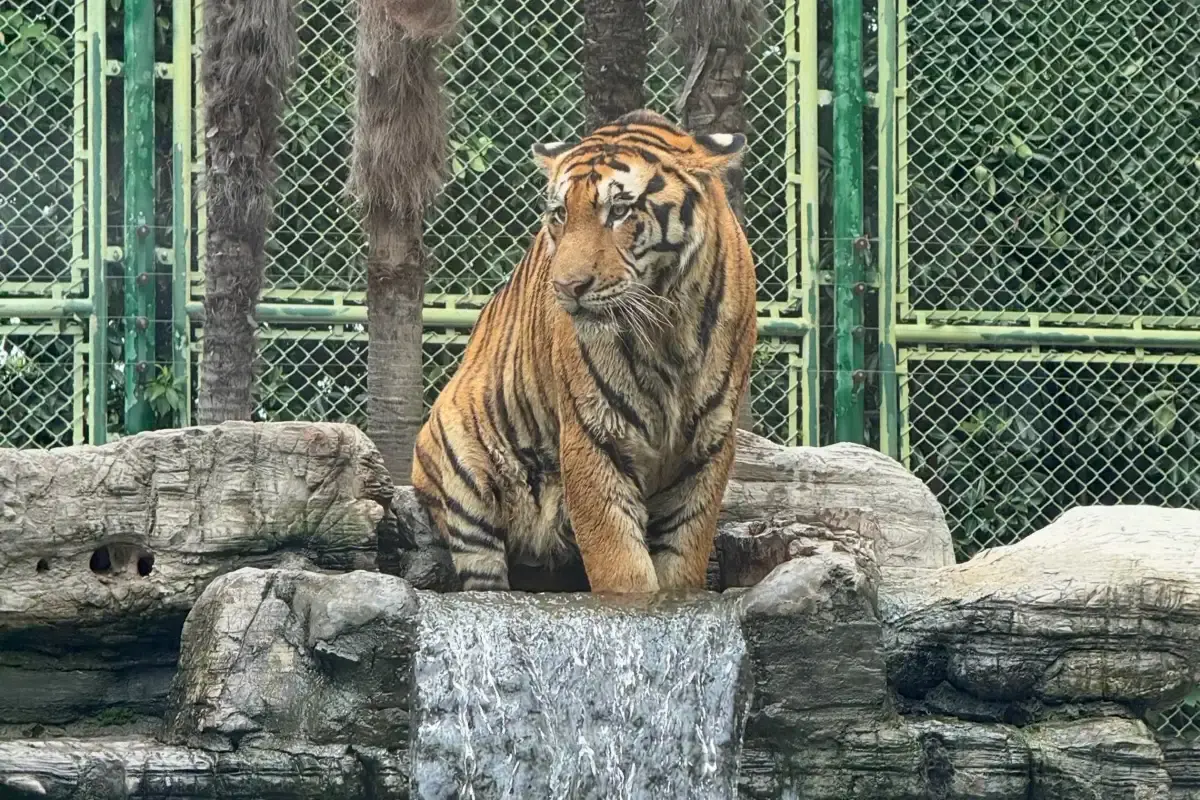
The drive-through area is the reason this park is called a wild animal park — and the safari bus is how you see it. Every ticket includes the ride, but there are two buses, two experiences and one decision worth making before you join the queue. Here is how the drive-through safari works.
How the drive-through area works
The park splits its 153 hectares into a drive-through area (车入区) and a walking area. In the drive-through zone the animals own the habitat: herds of zebras and antelopes graze open plains, white rhinos claim the waterholes, and the beast zones hold bears, wolves, African lions, cheetahs and Siberian tigers. Visitors stay in the vehicle the entire time — that is the safari formula, and why the park feels closer to Africa than to a city zoo.
The free enclosed coach
The standard ride is a free enclosed bus that runs all day with the ticket. You watch through glass, the route takes about an hour, and it covers the whole circuit: herbivore plains first, beast zones second. For most visitors — especially families with small children — this is the right call: safe, shaded, simple.
The open feeding bus — the upgrade travelers rave about
The feeding bus (投食车) rides the same route on an open-sided vehicle. The difference is the second half: keepers aboard toss food beside your window, and the animals come to you — tigers rise against the wire, bears stand for their share, and the photos are incomparable. Travelers report around 100 RMB per person for the upgrade, with a VIP feeding-vehicle ticket from $14.99 listed on Trip.com for the individual experience. One Russian reviewer calls the safari “a separate activity that delighted with its richness” — the feeding version is that sentence, amplified.
Safari tactics from the reviews
- Sit on the right side. Several travelers report more small-animal encounters on the right — and the beasts tend to favor it too.
- Do it first. Board before 10 AM: shortest queue, liveliest herds, best light. The line rebuilds after every tour group arrives.
- Telephoto lens. The park is big and the animals roam — a 70–200mm turns distant cats into portraits.
- Keep hands inside. On the open bus the animals are genuinely close. Follow the keepers’ instructions to the letter.
After the safari
🚍 The three ride options, compared
| Option | Price | Vehicle | Feeding | Best for |
|---|---|---|---|---|
| Free safari coach | Included | Enclosed bus, no AC | None | Every visitor — do this first |
| Standard feeding bus | ¥50 | Open-sided bus | Keepers feed beside windows | Photos of animals up close |
| VIP feeding car | ¥100 | Small AC vehicle, no mesh | You hand-feed the bears and tigers | Once-in-a-lifetime thrill |
🗺 What you pass, zone by zone
Herbivore plains first
The route opens in the mixed grazing field: gemsbok and blackbuck crowd the coach, giraffes lean over the verge, zebras and white rhinos graze further out, and camels occasionally block the road entirely — the bus simply waits them out.
Then the beast ridge
After a gate change, the predator sections roll by in sequence: the Malayan bear kingdom, Wolf Valley, the white tiger territory, the lion pride’s slope, the brown-bear hollow and finally the Siberian tiger forest. Keepers stage feeding sessions right along the glass for the paying buses.
💺 Seat strategy that actually works
- Right-hand side faces most predator enclosures on the standard routing — grab a right window in the boarding queue.
- Front rows give the cleanest glass for photos; rear rows catch keeper feeds best on the feeding bus.
- Board before 09:45 or after 14:30 to skip the school-group wave; the full loop takes 35–45 minutes.
- Self-driving? Private cars can enter a separate self-drive lane with the same ticket — windows stay up, feeding from cars is prohibited.
❓ Safari bus FAQ
Is the ¥50 feeding bus worth it over the free coach?
For most families, yes — it is the single most-recommended upgrade in visitor reviews, because animals walk right to the open sides. If you are on a tight budget, the free coach already covers every zone.
Can toddlers ride?
All three vehicles welcome small children; the free coach and feeding bus have steps, the VIP car is easiest for stroller-bound families.
Does the bus run in rain?
Light rain does not stop it; in storms or typhoon warnings the drive-through pauses until paths are safe.
The walking area waits: pandas, lemurs and the feeding docks — see our feeding encounters guide, or go straight to the one-day itinerary that strings it all together. Tickets with the safari included start at $28.48 on Trip.com.
