












The giants are the reason many visitors book the drive-through at all: a giraffe that leans its two-metre neck over the boarding dock, elephant families dust-bathing in the morning, and one of China’s rarest rhinos standing close enough to count skin folds. This guide covers where each giant lives, what the feeding experiences cost, and the small timing decisions that turn “we saw some animals” into “we met the herd”.
🦒 Giraffes: the park’s gentle gatekeepers
Giraffes appear twice. In the walking zone, the giraffe interaction dock is the park’s most popular feeding experience: buy a bunch of acacia-style leaves for around ¥20 and hold it flat on your palm while a giraffe sweeps it away with a tongue that runs half a metre. By early afternoon the animals are at their hungriest — around 14:00 is the reliable window — and the raised walkway means even small children can participate safely.
In the drive-through, the graceful giraffe zone puts the herd on the bus route itself: animals cross in front of vehicles at giraffe pace, which is to say slowly and entirely on their own schedule. Indoors, a giraffe house shelters mothers with calves in winter — worth a look in December when the outdoor fields are empty.
Giraffe facts worth repeating
- Giraffes sleep mostly standing, in five-to-thirty-minute naps — you will almost never see one lying down at the dock.
- Their 45-centimetre blue-grey tongue is sun-resistant, built for thorny acacia all day.
- Each giraffe’s coat pattern is unique, like a fingerprint — try matching individuals between the walking dock and the drive-through herd.
🐘 Elephants: Asia’s biggest family group in East China
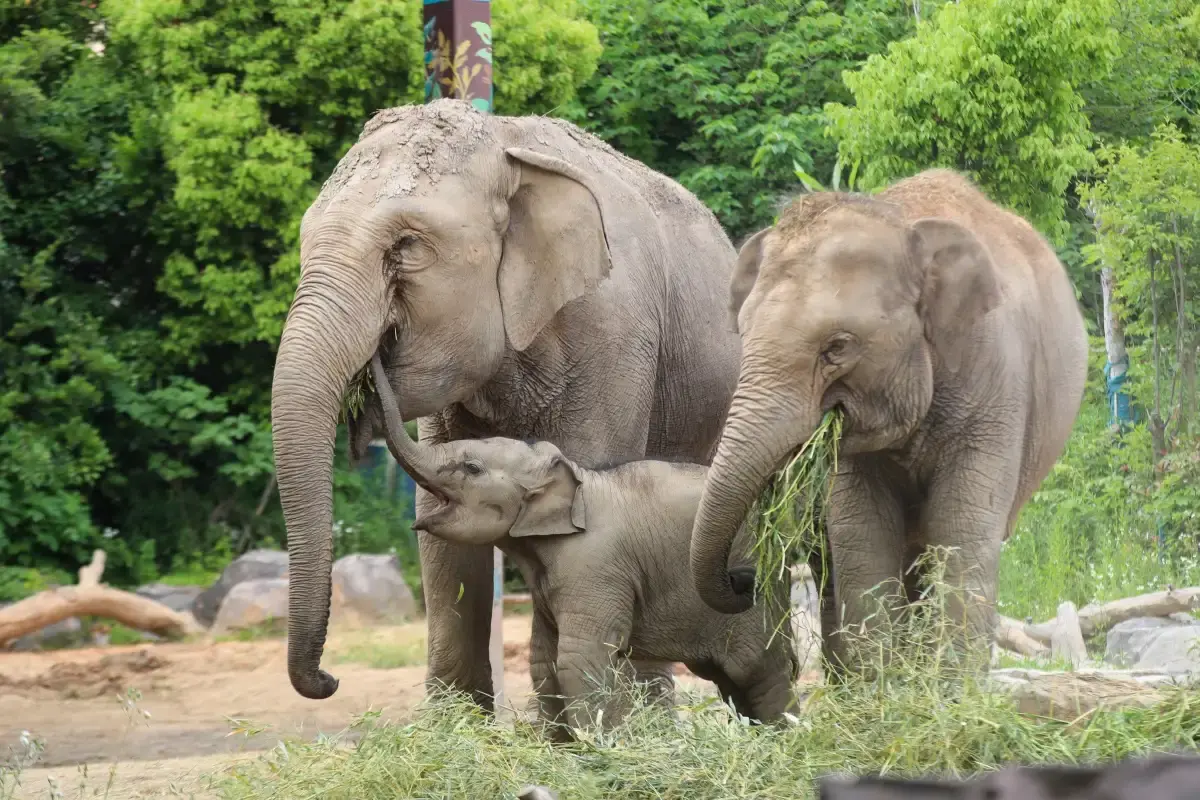
The park holds one of East China’s largest elephant herds — Asian and African elephants in adjoining yards off the walking loop. The Asian yard’s feeding platform sells browse portions; the African yard’s pool is the place to be around midday, when the herd plays, sprays and teaches calves to swim. Morning is bath-and-social time; by late afternoon the herd drifts to the shade shelters.
Watching responsibly
The park stages no riding or performance tricks with elephants — the contact you see is feeding, enrichment and husbandry demos. If you want the closest interaction, the walking yard’s feeding slot beats anything the drive-through offers.
🦏 Rhinos: including China’s only great one-horned rhino display
The park’s rhino collection includes white rhinos on the drive-through plains — mud-caked, armour-plated and surprisingly fast when two males settle an argument — and the park’s signature rarity: the great one-horned (Indian) rhino, an animal exhibited at very few Chinese facilities. Find the rhino yard on the walking loop; feeding here is occasional (check the booth) but the viewing is close and usually uncrowded, because most visitors walk straight past toward the giraffes.
🦓 And the rest of the plains crew
Share the fields with the giants: zebras that take carrot slices from the fence, camels that block the safari bus without apology, antelope herds (gemsbok, blackbuck, wildebeest) that crowd the coach in the drive-through, plus kangaroo slope just off the walking path where mobs of red kangaroos lie sprawled like the world’s laziest sunbathers. The kangaroo interaction ticket (~¥30) lets you hand feed at ground level; our гид по встречам с кормлением prices every booth.
📊 Giants at a glance
| Animal | Where to see | Interaction | Best time |
|---|---|---|---|
| Giraffe | Walking dock + drive-through zone | Leaves ~¥20 | ~14:00 hungry window |
| Asian elephant | Elephant yard, walking loop | Browse feedings | Morning baths |
| African elephant | African yard + pool | Watching | Midday swim |
| White rhino | Drive-through plains | None | Mud baths, feeding runs |
| Great one-horned rhino | Rhino yard, walking loop | Occasional feeds | Quiet middays |
| Zebra | Plains fence line | Carrots ~¥20–30 | Mornings |
| Kangaroo | Kangaroo Slope | Feed ~¥30 | Afternoon lounging |
🧭 Route logic for the giants
Do the drive-through early (the plains animals crowd the coach before 10:30), then the walking loop’s giant exhibits from late morning onward: elephants, rhinos, then the giraffe dock on the way to the panda house. Families can compress all of it into the plan in our маршрут на один день; photographers should read the photo guide for the giraffe-dock angles.
❓ Giants FAQ
Is the giraffe feeding included in the ticket?
No — the leaves are a small per-bunch charge (around ¥20) sold at the dock. Admission covers viewing; the interaction tickets are pay-as-you-go.
Can kids feed the giraffe?
Yes — the raised dock is designed for children; keepers hand a pre-cut portion to little ones and steady the bunch with them.
Are the elephants indoors in winter?
The yards stay open most winter days — elephants tolerate Shanghai’s cold better than the tropical primates — but the indoor barn viewing keeps running regardless.
What’s the one unmissable giant moment?
The giraffe-to-bus encounter in the drive-through zone: a full-height giraffe stepping across the road an arm’s length from the window. No fence, no glass, no zoom lens needed.
