












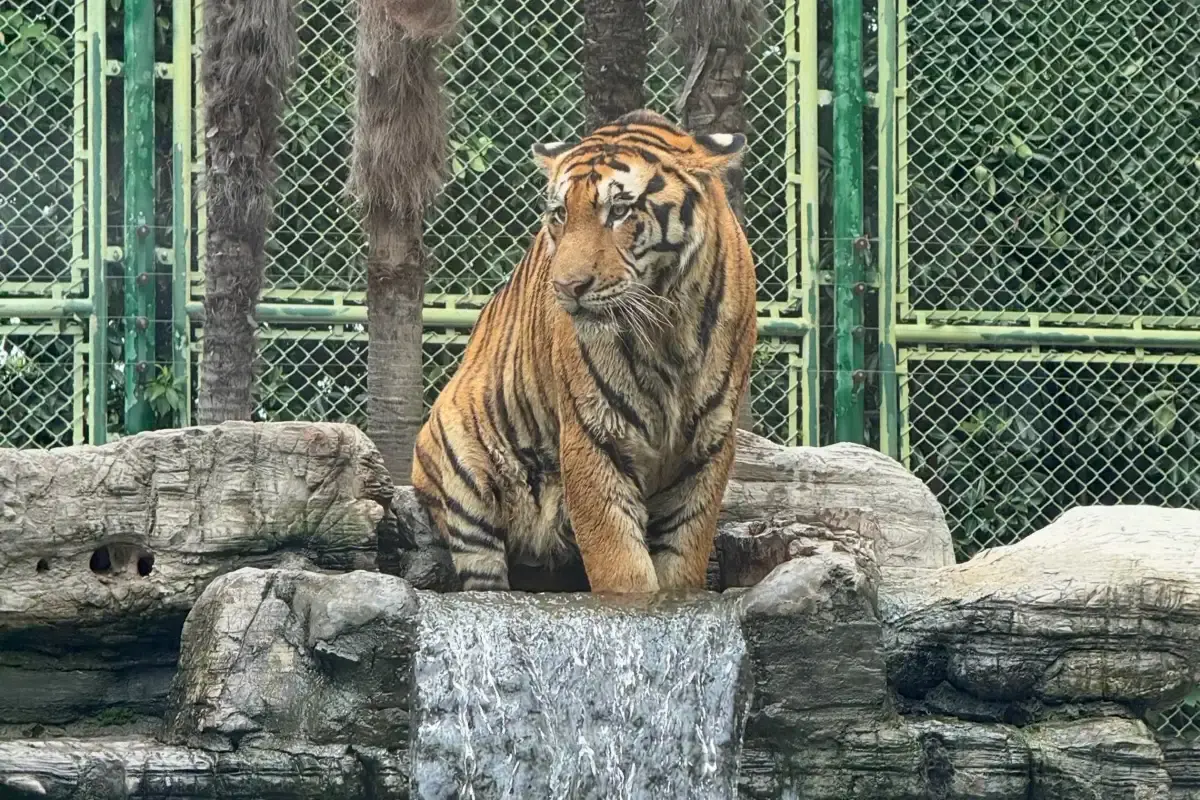
L'area drive-through è il motivo per cui questo parco è chiamato parco faunistico — e il bus safari è il modo per visitarlo. Ogni biglietto include la corsa, ma ci sono due bus, due esperienze e una decisione da prendere prima di mettersi in fila. Ecco come funziona il safari drive-through.
Come funziona l'area drive-through
Il parco suddivide i suoi 153 ettari in una area drive-through (车入区) e una area pedonale. Nella zona drive-through gli animali possiedono l'habitat: mandrie di zebre e antilopi pascolano nelle pianure aperte, i rinoceronti bianchi si appropriano degli abbeveratoi e le zone delle belve ospitano orsi, lupi, leoni africani, ghepardi e tigri siberiane. I visitatori restano nel veicolo per tutta la durata — è la formula del safari, ed è il motivo per cui il parco sembra più vicino all'Africa che a uno zoo cittadino.
Il pullman chiuso gratuito
La corsa standard è un bus chiuso gratuito che opera tutto il giorno con il biglietto. Si osserva attraverso il vetro, il percorso dura circa un'ora e copre l'intero circuito: prima le pianure degli erbivori, poi le zone delle belve. Per la maggior parte dei visitatori — soprattutto le famiglie con bambini piccoli — questa è la scelta giusta: sicura, ombreggiata, semplice.
Il bus aperto con alimentazione — l'upgrade di cui i viaggiatori parlano entusiasti
Il bus di alimentazione (投食车) segue lo stesso percorso su un veicolo a lati aperti. La differenza è nella seconda metà: i guardiani a bordo lanciano il cibo accanto al vostro finestrino e gli animali vengono da voi — le tigri si sollevano contro la rete, gli orsi si alzano per la loro parte e le foto sono incomparabili. I viaggiatori riportano circa 100 RMB a persona per l'upgrade, con un biglietto VIP per il veicolo con alimentazione da $14,99 elencato su Trip.com per l'esperienza individuale. Un recensore russo definisce il safari “un'attività separata che ha entusiasmato per la sua ricchezza” — la versione con alimentazione è quella frase, amplificata.
Tattiche per il safari secondo le recensioni
- Sedetevi sul lato destro. Diversi viaggiatori riportano più incontri con piccoli animali sul lato destro — e anche le belve tendono a preferirlo.
- Fatelo per primo. Salite a bordo prima delle 10: coda più breve, mandrie più vivaci, luce migliore. La fila si ricrea dopo l'arrivo di ogni gruppo turistico.
- Obiettivo teleobiettivo. Il parco è grande e gli animali vagano — un 70–200mm trasforma i felini distanti in ritratti.
- Tenete le mani all'interno. Sul bus aperto gli animali sono davvero vicini. Seguite le istruzioni dei guardiani alla lettera.
Dopo il safari
🚍 The three ride options, compared
| Option | Price | Vehicle | Feeding | Best for |
|---|---|---|---|---|
| Free safari coach | Included | Enclosed bus, no AC | None | Every visitor — do this first |
| Standard feeding bus | ¥50 | Open-sided bus | Keepers feed beside windows | Photos of animals up close |
| VIP feeding car | ¥100 | Small AC vehicle, no mesh | You hand-feed the bears and tigers | Once-in-a-lifetime thrill |
🗺 What you pass, zone by zone
Herbivore plains first
The route opens in the mixed grazing field: gemsbok and blackbuck crowd the coach, giraffes lean over the verge, zebras and white rhinos graze further out, and camels occasionally block the road entirely — the bus simply waits them out.
Then the beast ridge
After a gate change, the predator sections roll by in sequence: the Malayan bear kingdom, Wolf Valley, the white tiger territory, the lion pride’s slope, the brown-bear hollow and finally the Siberian tiger forest. Keepers stage feeding sessions right along the glass for the paying buses.
💺 Seat strategy that actually works
- Right-hand side faces most predator enclosures on the standard routing — grab a right window in the boarding queue.
- Front rows give the cleanest glass for photos; rear rows catch keeper feeds best on the feeding bus.
- Board before 09:45 or after 14:30 to skip the school-group wave; the full loop takes 35–45 minutes.
- Self-driving? Private cars can enter a separate self-drive lane with the same ticket — windows stay up, feeding from cars is prohibited.
❓ Safari bus FAQ
Is the ¥50 feeding bus worth it over the free coach?
For most families, yes — it is the single most-recommended upgrade in visitor reviews, because animals walk right to the open sides. If you are on a tight budget, the free coach already covers every zone.
Can toddlers ride?
All three vehicles welcome small children; the free coach and feeding bus have steps, the VIP car is easiest for stroller-bound families.
Does the bus run in rain?
Light rain does not stop it; in storms or typhoon warnings the drive-through pauses until paths are safe.
Vi attende l'area pedonale: panda, lemuri e le piattaforme di alimentazione — consultate la nostra guida agli incontri con alimentazione, oppure andate direttamente alla itinerario di un giorno che collega tutto insieme. I biglietti con il safari incluso partono da $28.48 su Trip.com.
