












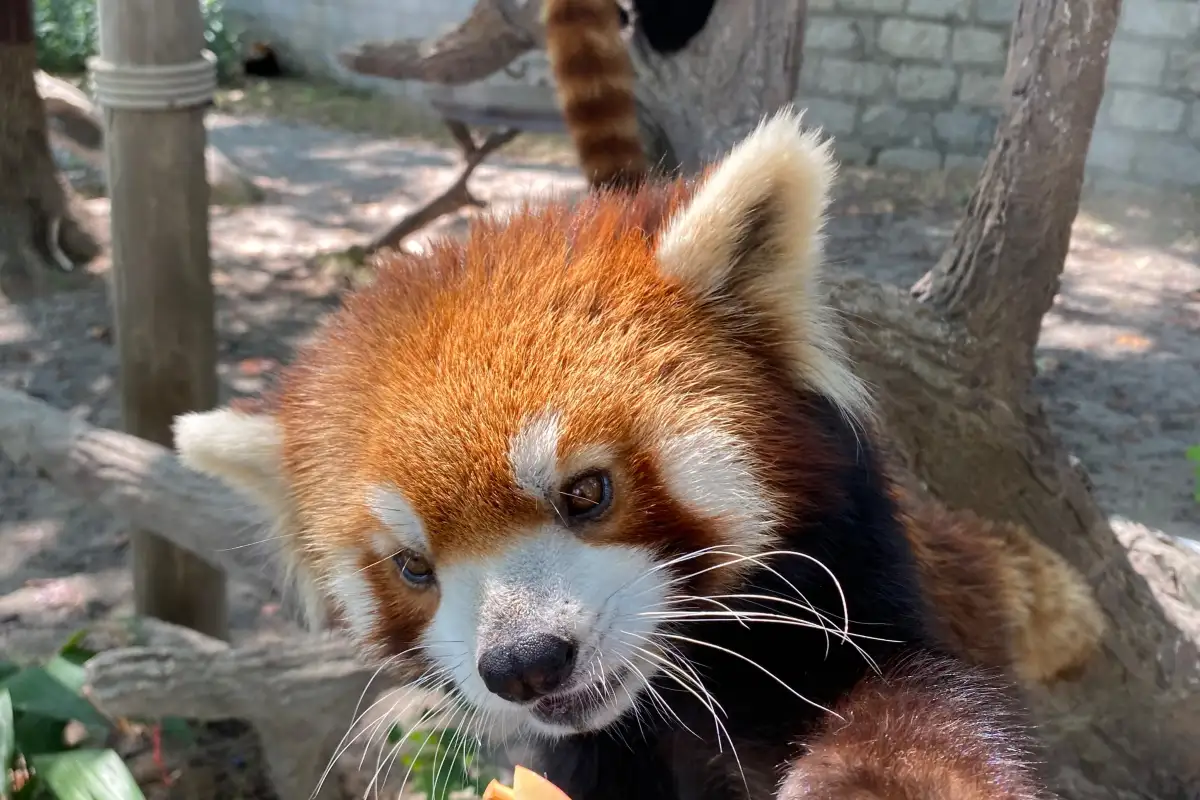
Every animal park has its headliners, but Shanghai Wild Animal Park’s social-media fame rests on three smaller animals: the sprinting, corn-dog-eating red pandas; the sunbathing ring-tailed lemurs of Lemur Island; and the deadpan capybaras who soak in their own hot tub. This guide covers where to find all three, what the interaction tickets cost, and the times when each one is actually awake.
🐻 Red pandas: the cloud-ladder sprinters
The red panda habitat is one of the park’s signature exhibits. Its defining feature is the elevated walkway — the “cloud ladder” — where the pandas cross overhead on ropes and branches while visitors watch from below. Red pandas here alternate between high-wire mode and ground mode; when one commits to a full sprint along the ladder, phones come out in unison.
Catching them at their best
- Mornings: red pandas do their circuit of the enclosure early, before the heat. Be near the ladder by 09:30–10:30.
- Feeding sessions: keepers scatter fresh leaves and fruit; a keeper-led “red panda PE class” enrichment demo runs on many days — the entrance board lists it.
- Cold days: red pandas are built for mountains; they are noticeably livelier from October to April than in August.
The park sells a red-panda-shaped ice cream that has become an Instagram cliché — it is genuinely good (red bean filling), so join the line once.
🙈 Lemur Island: walk-in sunshine madness
Lemur Island is the walking zone’s most interactive free experience. Ring-tailed lemurs — the ones with the black-and-white striped tails — lounge on logs, hop between branches and occasionally pose inches from the path. Numbers vary by season, but the island typically holds a dozen or more animals, and on sunny mornings they line the logs like commuters.
Rules that matter here
- No touching or handing food — lemurs take keeper-provided snacks only, and keepers patrol the walkway.
- Keep strollers at the entrance rail; the walkway is narrow at the bridge.
- Best light is 10:00–12:00 when the group “sun-worships” in a row, bellies to the sun — the classic lemurs-meditating pose.
🦫 Capybara Land: the world’s calmest celebrities
The capybara park earned the park a wave of viral attention: a lawn-and-pool habitat where the world’s largest rodents graze, waddle and — in winter — soak in a heated pool with stone-spa energy. A themed restaurant sits beside the enclosure, so you can eat lunch while a capybara judges your choices through the glass.
Interaction tickets
A lettuce-feeding interaction ticket (around ¥30) lets you hand a leaf to a capybara from the dock. The animals take lettuce with surgical politeness, which children find hilarious. Sessions pause in heavy rain; tickets sell at the booth beside the pool.
🦝 Also in this corner of the park
Don’t walk past the smaller exhibits near Small Animal Paradise: a nursery den of raccoons, a pair of shuffling giant anteaters (their tongues are two feet long — try to catch feeding time), meerkats on sentry duty, and the park’s small primates — cotton-top tamarins and capuchins — in the primate zone. Toddlers can meet ponies and rabbits in the petting corner of Small Animal Paradise; our family itinerary slots this section right after lunch.
🗺 Mini-route for the “cute animals” loop
| Stop | Time budget | Best window |
|---|---|---|
| Red panda cloud ladder | 20 min | 09:30–10:30 |
| Lemur Island walk | 15 min | 10:00–12:00 |
| Capybara pool + feeding | 20 min | Any; quiet after 11:15 |
| Anteater & meerkat stops | 15 min | Feeding times on board |
| Small Animal Paradise petting | 20 min | Before 12:00 crowds |
The whole loop fits in 90 minutes and, unlike the drive-through queue, it never has a line to enter.
❓ Cute-animals FAQ
Is Lemur Island free?
Yes — walking onto the island’s path costs nothing beyond admission; only the capybara lettuce and some small-animal feeds sell tickets.
Red panda vs giant panda: which do we see first?
Do the giant pandas around the 11:00 feed, then walk to the red pandas while the crowd dissolves — the two exhibits are a few minutes apart. Details in our panda house guide.
Are the capybaras out in winter?
Yes — the heated pool is precisely the winter attraction; expect maximum soaking between November and March.
Can we bring our own lettuce?
No. Outside feeding of any animal is prohibited; interaction tickets exist because keepers control the diet. The park’s own leaves are washed and portioned.
